
If you're here to claim your artwork, click below
Click below to claim your authenticated Anclude piece and finish registration.


Katsushika Hokusai
The Dream of the Fisherman's Wife
The Dream of the Fisherman's Wife
Currently shipping within the United States only.
Couldn't load pickup availability
🖼 2 pieces → 5% off
🖼🖼 3 pieces → 10% off, free wall mount, free 📦
🖼🖼🖼 4 pieces → 15% off
🖼🖼🖼🖼 5+ pieces → 20% off
Details
Details
- Giclée fine art print
- Museum-grade archival pigment inks
- Printed on 210g textured acid-free, fine-art paper
- Glass-free presentation, no framing required
- Lean it against the wall or hang it with our accessories
- Backed by ClaimProof™ for authenticating and claiming
Dimensions
Dimensions
- Width: 10.6 in / 27 cm
- Height: 12.6 in / 32 cm
- Depth (thickness): 0.6 in / 15 mm
- Weight: 1.3 lb / 580 gr
Shipping & Returns
Shipping & Returns
Ships from the U.S.
Returns accepted within 14 days of delivery, unused and in original packaging.




More About The piece
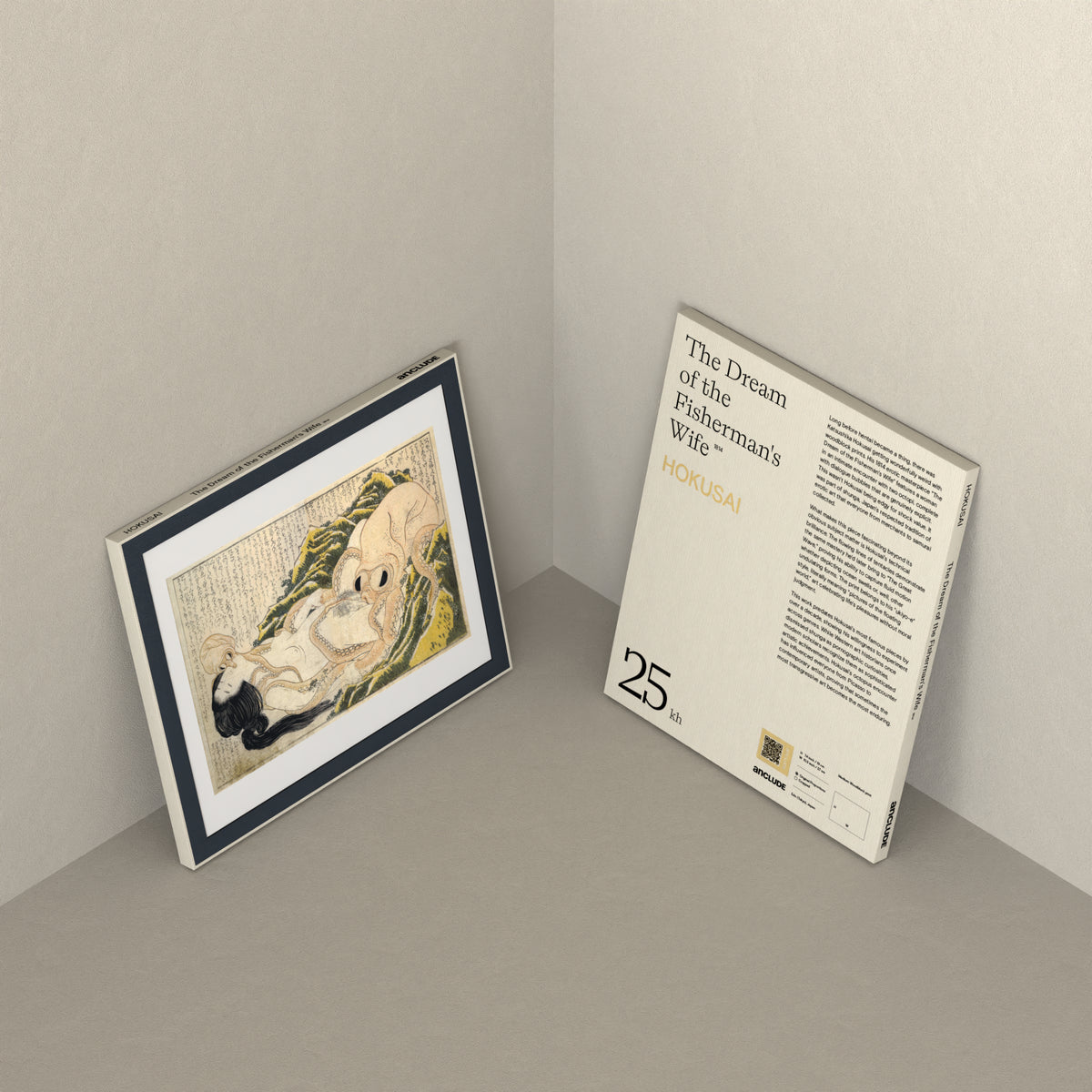
Long before hentai became a thing, there was Katsushika Hokusai getting wonderfully weird with woodblock prints. His 1814 erotic masterpiece "The Dream of the Fisherman's Wife" features a woman in an intimate encounter with two octopi, complete with dialogue bubbles that are genuinely explicit. This wasn't Hokusai being edgy for shock value. It was part of shunga, Japan's respected tradition of erotic art that everyone from merchants to samurai collected.
What makes this piece fascinating beyond its obvious subject matter is Hokusai's technical brilliance. The flowing lines of tentacles demonstrate the same mastery he'd later bring to "The Great Wave," proving his ability to capture fluid motion whether depicting ocean swells or, well, other undulating forms. The print belongs to his "ukiyo-e" style, literally meaning "pictures of the floating world," art celebrating life's pleasures without moral judgment.
This work predates Hokusai's most famous pieces by over a decade, showing his willingness to experiment across genres. While Western art historians once dismissed shunga as pornographic curiosities, modern scholars recognize them as sophisticated artistic achievements. Hokusai's octopus encounter has influenced everyone from Picasso to contemporary artists, proving that sometimes the most transgressive art becomes the most enduring.